09.10.2026
New UKIPO guidance provides greater clarity and flexibility for protecting animated designs and graphical user interfaces.
Thank you
Visual aspects of software, apps, websites and other digital products, including Graphical User Interfaces (GUIs) and graphic symbols or icons, are often key elements of a brand’s identity. It is therefore not surprising that the UK Intellectual Property Office (UKIPO) has seen an increasing number of applications in this area, and with this an increasing number of requests from users to clarify what is and is not acceptable in this respect.
To address this, the UKIPO issued a Designs Practice Notice (DPN 01/26) in April 2026, and our main takeaways are below.
In the UK, digital designs that contain animation or movement can be protected through a set of (up to 12) static representations that depict successive stages of the animation/sequence, so long as the representations represent a single, unitary design. The UKIPO clarifies in its Practice Notice that, whilst there should generally be visual similarities between the representations of an animated/moving sequence to support the unitary design requirement, the first and last representations may differ significantly from one another.
This is a welcome update that will provide greater flexibility for protecting animated/moving digital designs. Under the UKIPO's previous approach, Applicants frequently encountered objections on the basis that a sequence comprised more than one design if elements were added, removed or altered between representations, even when substantial visual similarities remained throughout.
The Practice Notice nevertheless reiterates that the progression between representations of a sequence must be clear to avoid objection.
For this, the UKIPO notes that Applicants may wish to consider including a written disclaimer, but cautions that an objection may be raised if a high degree of interpretation is required to assess the design in view of a complex or lengthy written disclaimer. Given that introducing or substantively amending a written disclaimer in response to an objection could result in the application being re-dated to the date on which the amendment was made, such disclaimer use and wording should be carefully considered ahead of filing, and I suspect we will see best practice for disclaimer use in this area develop over the coming months and years.
The UKIPO also clarifies that the product indication for an animated design should expressly identify the design as an animation to ensure that the design is assessed as such.
The Practice Notice provides helpful clarification regarding GUIs that include multiple screen arrangements, such as interfaces where a user navigates between different screens.
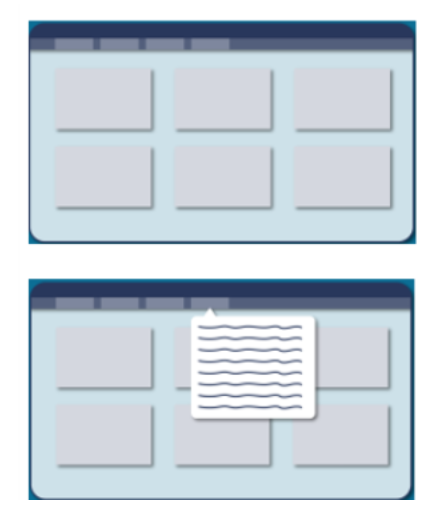
In one example (shown below), the UKIPO confirms that it is acceptable to show a GUI screen in one representation, and the same screen with a simple pop-up window in another, as part of the same design. In this case, the transition shown in the design (i.e. from a screen without a pop-up to the same screen with a pop-up) should be made clear through an appropriate product indication or disclaimer, for example. It is worth noting that the UKIPO cautions that more complicated pop-up arrangements would be considered on a case-by-case basis to assess whether they represent a unitary design.
Source: UK Intellectual Property Office, Designs Practice Notice (DPN) 01/26
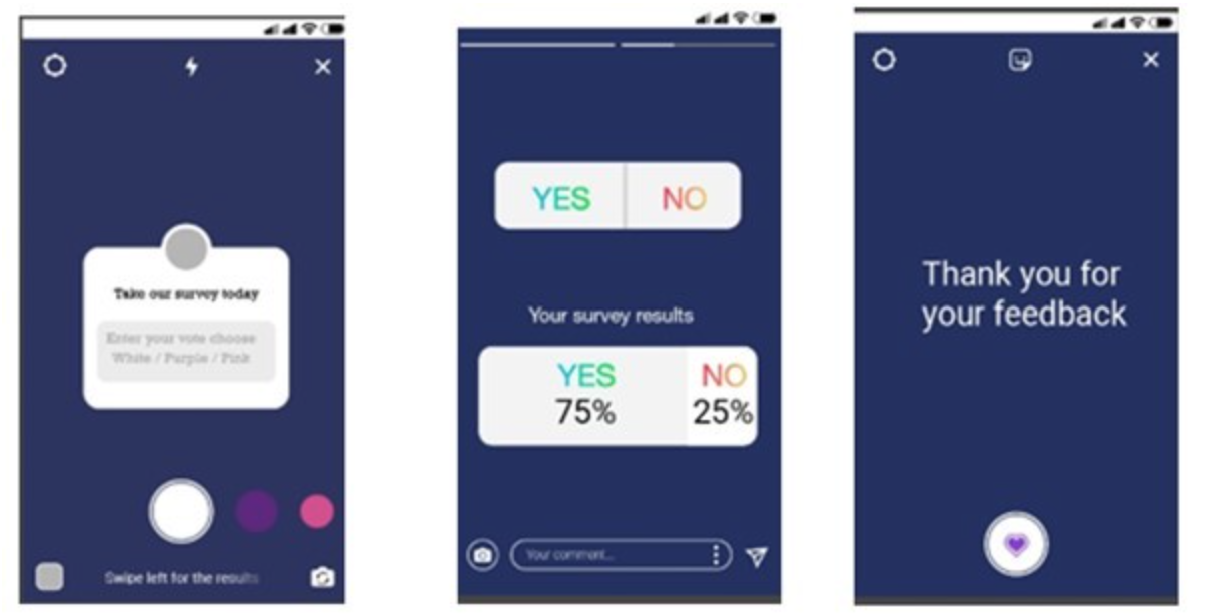
In another example (shown below), the UKIPO illustrates three screen arrangements that would not be considered acceptable as a single design. Each arrangement has similarities in respect of their backgrounds in particular, and are linked in that a user may move from one screen to the next, but the overall impression is deemed not to be of a unitary design in view of the substantially different foreground elements. Three separate designs would therefore be needed to protect all three screen arrangements, and this could be pursued through dividing the application in response to an objection, or at the application filing stage.
Source: UK Intellectual Property Office, Designs Practice Notice (DPN) 01/26
This article contains public sector information licensed under the Open Government Licence v3.0.
Thank you