23.04.2026
TfL’s public transport system is recognised worldwide, and copyright helps safeguard the creative works behind its most distinctive features.
Thank you
Any visitor to London will at some point use the city’s nearly 9,000 red buses, 15,000 black cabs or 11 Underground lines. Managed by Transport for London (TfL) since 2000, the capital’s public transport system is iconic not just locally but globally, and is supported by a range of valuable intellectual property rights.

While logos and slogans often take centre stage in discussions of transport branding, some of London’s most important IP assets are protected by copyright. One of the best‑known examples is the London Underground map.
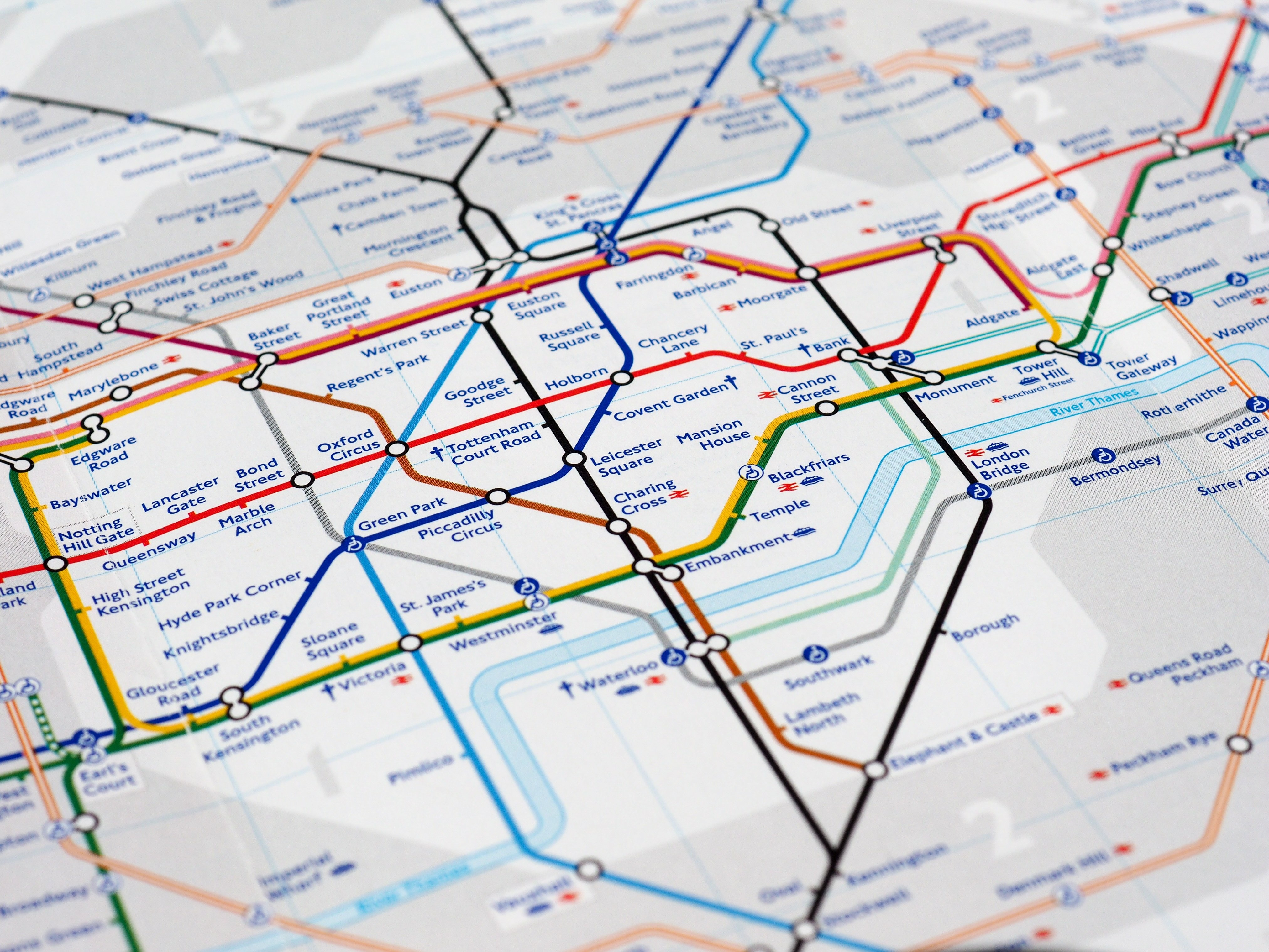
The first London Underground line opened in 1863. After seventy years of expansion, the network comprised seven separate lines run by different companies and more than 200 stations, many of them interchanges. As the network grew, navigating it became increasingly difficult, and the Underground needed a clearer way to help passengers find their way around.
Harry Beck provided the solution. His design, first published in 1933, was based on two innovative ideas. First, he used straight lines rather than attempting to represent the geographical twists and turns of the tracks. Second, he assigned each line a different colour. Beck was an electrical draughtsman, and his approach was likely influenced by circuit diagrams rather than traditional maps.
Although the Tube map has been updated many times to reflect new lines and stations, the core structure of Beck’s original design remains recognisable today. Variations of the map are also used for buses and other transport services across London. At the time of writing, the most recent version of the Tube map was published in October 2025.
Copyright in the map is owned by Transport for London. Licensing is managed by its partner, Pinder Creative, with set royalty rates for commercial and promotional use, printed informational materials (such as diaries or guidebooks), and digital applications. Standard licence terms prohibit any modification of the map, including changes to station names, and require payment in advance.
The fame of the Tube map has inspired numerous parodies and tributes. One of the most notable is The Great Bear, a 1992 lithograph by artist Simon Patterson, in which station names were replaced with cultural figures and planets. Copyright in The Great Bear is jointly owned by Simon Patterson and Transport for London, illustrating how derivative works can themselves attract new layers of protection
For another example of how TfL protects its most recognisable assets, see our article on trade marks and transport branding here.
Thank you