15.01.2026
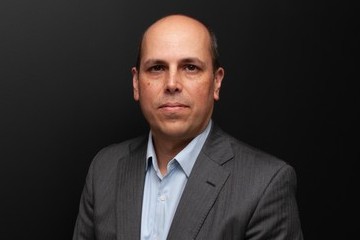
Keltie is again recognised among the very best in global patent practice, with Partner Devanand Crease named an IAM Global Leader for 2026. The IAM Global Leaders list highlights individuals who combine outstanding technical expertise with strategic insight and commercial awareness. This recognition reflects extensive market feedback, individual excellence, and demonstrates Keltie’s commitment to delivering tailored, business-focused IP advice that supports innovation.
Thank you
We speak to Dev about what the award represents, the challenges facing life sciences innovators, and how IP strategies must evolve in a complex landscape.
It is certainly an honour to receive this kind of recognition. I hope it underscores the personal approach that I strive to maintain in my practice, ensuring that clients receive bespoke IP advice whether they are an early-stage startup or a multinational corporation. I am interested in my clients’ aspirations, their goals and ambitions. It is what makes my job exciting.
It demonstrates our commitment to providing clients with practical, business-oriented IP solutions that will underpin commercial success. Our focus on really understanding clients' business objectives and tailoring our strategies accordingly is evidently gaining traction in a competitive global marketplace. This kind of approach cannot be replaced by commoditised or automated services; it requires people to interact and share information and to use that knowledge constructively to provide novel solutions. As every client is unique, I believe that template advice does not serve the client in the long run. Automation of professional advice drags companies into the indistinguishable centre ground, it will be the outliers that are disruptors and who take advantage of the lack of meaningful competition.
My scientific grounding enables me to communicate with clients on a very productive level. We talk about the science and the commercial expression of that in the products and services that will result from it. The IP strategy underpins the commercial strategy; the claims support the development pathway. One has to be a bit forensic in teasing out the long-term view, it’s really easy to obsess over how great the science is and lose sight of the bigger picture. I see this happen a lot when doing due diligence for investors, the science shines through in the IP but commercial imperative is lost. This can cause problems with valuation of the IP.
The life sciences are rapidly evolving, if you forgive the pun, and the innovations they produce often push the boundaries of existing IP frameworks, requiring novel approaches to patent protection. Biology is a ‘big data’ science and increasingly requires the use of AI and machine learning to advance innovations. Our life science team has become adept at handling advanced computational approaches as much as complex systems biology and biochemistry. This has to be considered alongside the challenges presented by global legal systems on patent eligibility. Once again, a unique focus allows us to anticipate future challenges and ensure the best coverage possible for our clients.
Biology and pharmaceutical technologies can be particularly difficult to protect because they involve complex interdisciplinary innovations. The rapid pace of advancements in these fields means that patent strategies must be continuously adapted to keep up with new developments in technology and case law to ensure comprehensive protection that lasts for decades.
Looking ahead, any successful IP strategy over the next five years will be defined by adaptability and foresight. It will be crucial to anticipate future trends and innovations and develop proactive patent strategies that provide robust protection while accommodating the evolving landscape of patent law, technological advancement and commercial trends.
As life sciences and biology-driven technologies continue to advance at a pace, the demands on IP strategy are set to increase. From managing complex data-driven innovation to navigating evolving global patent frameworks, success will depend on foresight, adaptability and sector understanding. For the Life Sciences team, the key remains a personal approach that connects scientific insight with commercial reality.
Thank you